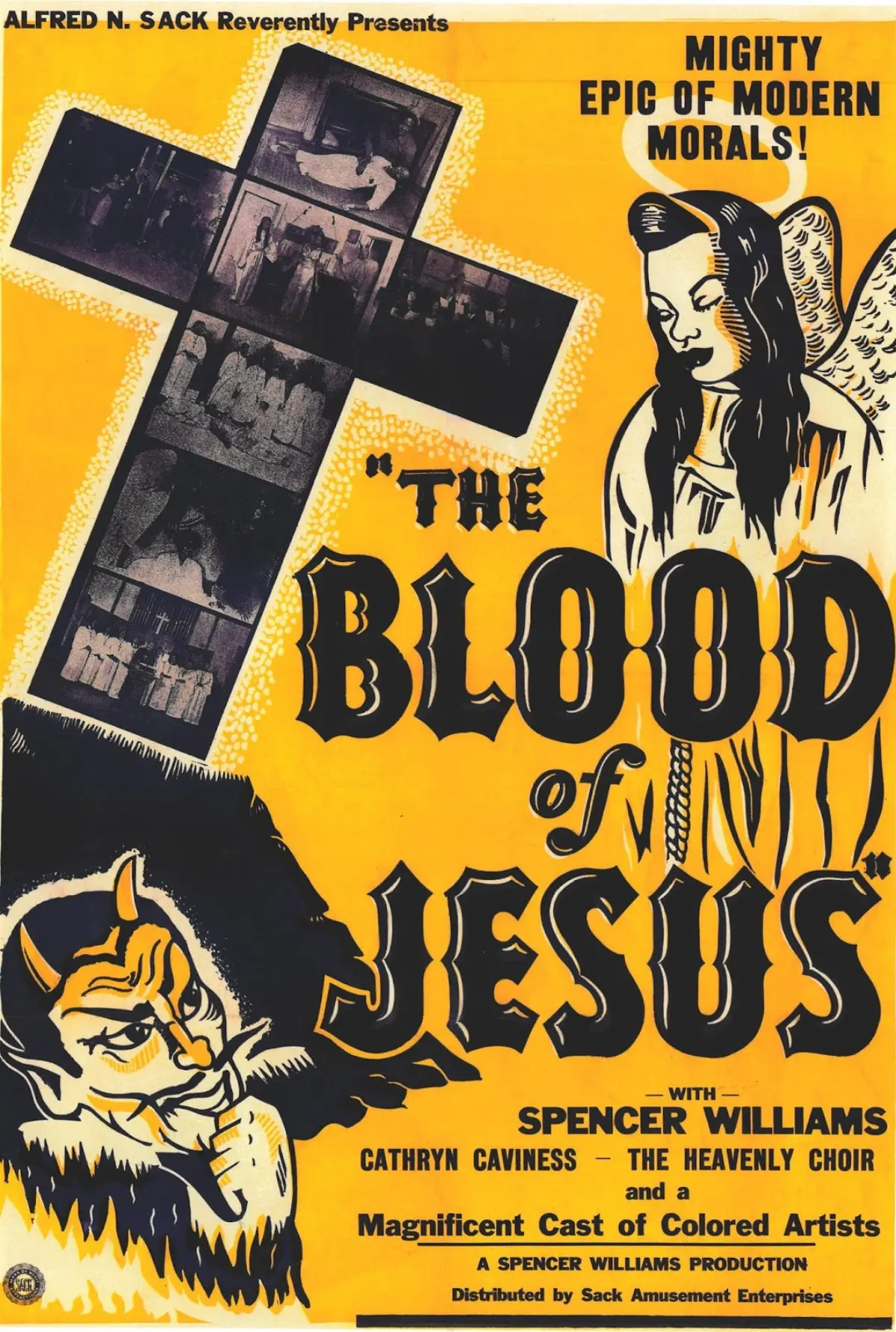
Alfred N. Sack formed Sack Amusement Enterprises in San Antonio in 1920, according to the Handbook of Texas. It combined a theater chain with film distribution and later production, and its main business was films made for Black audiences, then called race movies. The company moved to Dallas. The Handbook describes it as the main distributor of Black-cast films in the United States between 1920 and 1950, and a major producer and distributor of such features and shorts from 1937 to 1945.
In the early 1940s Sack met Spencer Williams. Williams was a Black writer and actor from Louisiana who had worked as a sound technician and writer at Christy Studios in Hollywood, acted in all-Black westerns, and written Son of Ingagi (1940), which the Handbook calls the first horror film with an all-Black cast. Sack offered to back him in a series of features. Williams agreed to write, direct and act. From 1941 through 1947, the two made ten films, most of them shot in and around Dallas. They released them under several company names: Sack Amusement Enterprises, Amegro Films, Sack Attractions and Harlemwood Studios.
The films covered religious stories, comedy and drama. The Blood of Jesus (1941), shot in Dallas, was followed by Brother Martin, Marchin' On, Go Down, Death! with Myra D. Hemmings, Of One Blood, The Girl in Room 20, Dirty Gertie from Harlem U.S.A., Beale Street Mama and Juke Joint. A musical performance film, Jivin' in Bebop, featured Dizzy Gillespie and his orchestra. Texas Film Commission records place Dirty Gertie and Juke Joint in both Dallas and San Antonio. The Handbook of Texas says Sack gave Williams the freedom to shape the films as he saw fit, and that the results were generally faithful to reality and free of the stereotypes common to the genre. It quotes the film historian Thomas Cripps, who called The Blood of Jesus 'an exemplar of Southern Black fundamentalism, untrammeled by White intrusion.'
Williams went on to play Andy Brown on CBS's television version of Amos 'n' Andy from 1950 to 1953, and he died in Los Angeles in 1969. The Handbook judges his Texas work of the 1940s to be his most significant achievement. Sack Amusement Enterprises was declared an inactive corporation in 1979.
Unlike many race films of the era, most of the Sack-Williams pictures survived. The Southwest Film-Video Archives in Dallas found and restored most of them. In 1991, The Blood of Jesus was selected for the National Film Registry.