Texas Call Sheet Post a call
Star Film Ranch (Méliès Star Film Company, Texas unit)
Texas film legacy1910–1911

Star Film Ranch (Méliès Star Film Company, Texas unit)

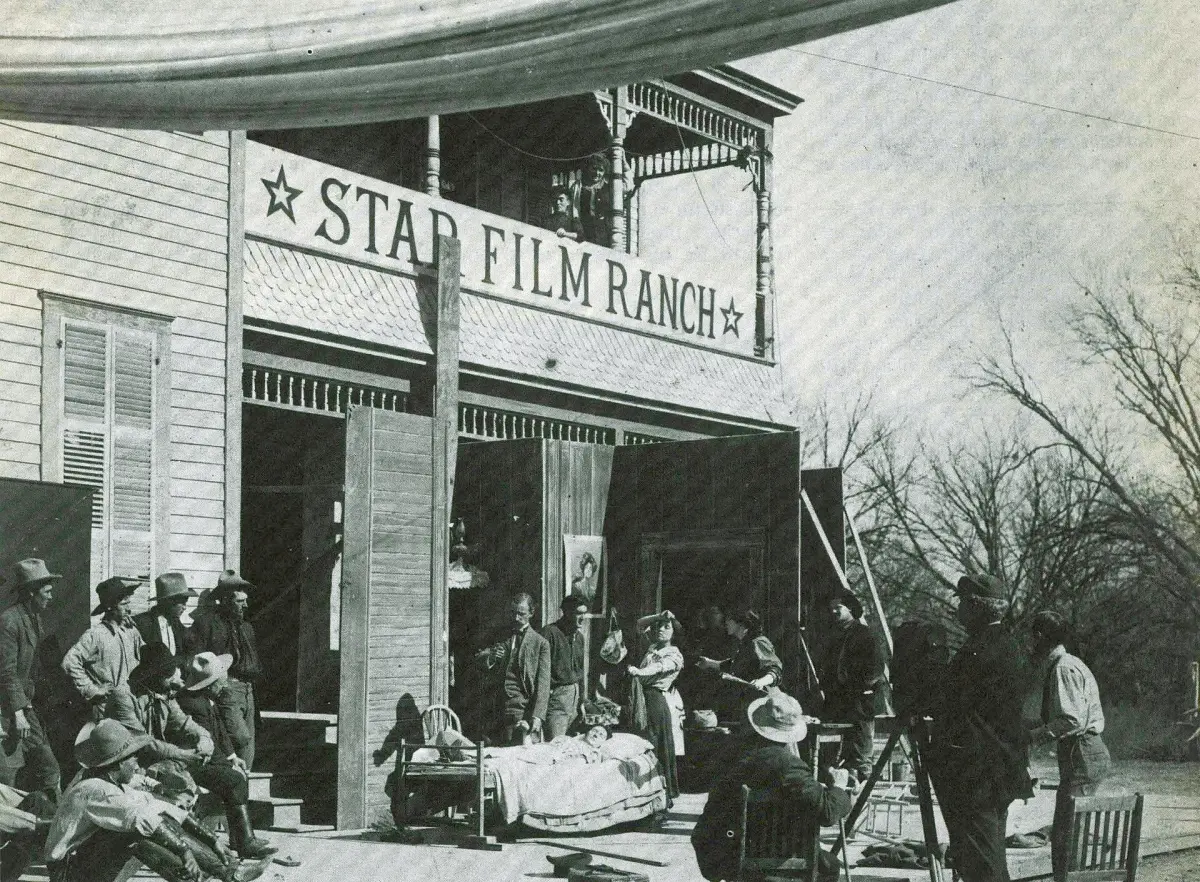
The first movie studio in Texas: Gaston Méliès's New York company set up on a rented ranch outside San Antonio in January 1910 and made more than 70 one-reel films there, among them The Immortal Alamo (1911), the earliest film about the battle.

San Antonio · Closure: the company filmed in San Antonio for a little over a year and then left Texas

The story

In late December 1909, Gaston Méliès sent a film troupe from New York to Texas for four months of production. Gaston was the older brother of the French film pioneer Georges Méliès and ran the American branch of the Star Film Company in Manhattan. On December 29, a group of ten led by company manager Carl Anderson boarded the Mallory steamer Brazos in New York; they landed at Galveston on January 5, 1910. Director Wallace McCutcheon and Gaston's son Paul Méliès, the assistant manager, had reached San Antonio on January 2. Gaston stayed in New York to run print duplication and sales.

The company rented a house known as the Green House and 20 acres across the San Antonio River from the Hot Wells Resort, near Missions San José and San Juan. Interior scenes were shot outdoors on a wooden stage in front of the ranch house, with canvas walls. Cold weather and construction delayed the start of filming until mid-January. The economics were tight. Gaston wanted 2,000 feet of film a week, the company's contract with Thomas Edison's patents trust required a 1,000-foot reel every Friday, and the trip cost about $2,000 a week. Actors signed four-month contracts at $100 a week. McCutcheon left for New York in February, and by April the census listed Hector Dion as manager of the 'film factory.' The Seal of the Church, the company's fourth finished film, was released on April 28, 1910.

The troupe included camera operator William Paley, scenic artist Horace Siller and actors Francis Ford and the 17-year-old Edith Storey. The University of Texas Press says Ford learned film directing on the job in San Antonio and later mentored his younger brother, John Ford. The company aimed for 'authentic' Westerns and used real cowboys. Its films were about half comedies and half melodramas, often with women characters riding to the rescue. Texas Film Commission records list dozens of San Antonio titles from 1910 and 1911, from A Texas Joke and Cyclone Pete's Matrimony to How Mary Met the Cowpunchers. The best-remembered is The Immortal Alamo (1911), the earliest screen depiction of the battle. UT historian Kathryn Fuller-Seeley notes it was a 15-minute film in which one actor played several historic figures.

The company filmed in Texas for a little over a year and made more than 70 single-reel films before the studio dissolved. Most of the films were lost, and the operation was largely forgotten. Fuller-Seeley and film historian Frank Thompson pieced it back together from reviews, scrapbooks and an unpublished autobiography for their 2026 book, The First Movie Studio in Texas.
Productions

24 titles
YearTitleKind
1911The Immortal Alamoshort film (the earliest screen depiction of the battle, per UT Press) ↗︎
1910The Seal of the Churchshort film (released April 28, 1910; the company's fourth completed Texas film) ↗︎
1910A Texas Jokeone-reel short (shot in San Antonio) ↗︎
1910Cyclone Pete's Matrimonyone-reel short (shot in San Antonio) ↗︎
1910The Cowboys and the Bachelor Girlsone-reel short (shot in San Antonio) ↗︎
1910In the Mission Shadowsone-reel short (shot in San Antonio) ↗︎
1910The Padre's Secretone-reel short (shot in San Antonio) ↗︎
1910Under the Stars and Barsone-reel short (shot in San Antonio) ↗︎
1910The Romance of Circle Ranchone-reel short (shot in San Antonio) ↗︎
1910Branding a Thiefone-reel short (shot in San Antonio) ↗︎
1910A Plucky American Girlone-reel short (shot in San Antonio) ↗︎
1910Speed Versus Deathone-reel short (shot in San Antonio) ↗︎
1910White Doe's Loversone-reel short (shot in San Antonio) ↗︎
1911How Mary Met the Cowpunchersone-reel short (shot in San Antonio) ↗︎
1911The 'Schoolmarm' of Coyote Countyone-reel short (shot in San Antonio) ↗︎
1911Sir Percy and the Punchersone-reel short (shot in San Antonio) ↗︎
1911The Owner of the L.L. Ranchone-reel short (shot in San Antonio) ↗︎
1911The Redemption of Rawhideone-reel short (shot in San Antonio) ↗︎
1911The Spring Round-Upone-reel short (shot in San Antonio) ↗︎
1911The Warrant for Red Rubeone-reel short (shot in San Antonio) ↗︎
1911Bessie's Rideone-reel short (shot in San Antonio) ↗︎
1911An Unwilling Cowboyone-reel short (shot in San Antonio) ↗︎
1911The Honor of the Flagone-reel short (shot in San Antonio) ↗︎
1911Tony, the Greaserone-reel short (shot in San Antonio) ↗︎

People

NameRoleYears
Gaston Mélièsproducer; head of the Star Film Company (older brother of Georges Méliès); stayed in New York to run duplication and sales1910-1911 ↗︎
Wallace McCutcheondirector on location; left for New York in February 19101910 ↗︎
Paul Mélièsassistant manager on location (Gaston's son)1910 ↗︎
Carl Andersoncompany manager1910 ↗︎
Hector Diondirector/manager of the 'film factory' per the April 1910 census1910 ↗︎
Francis Fordactor who learned film directing on the job; mentor to his younger brother John Ford1910-1911 ↗︎
Edith Storeylead actress, 17 years old1910-1911 ↗︎
William 'Daddy' Paleycamera operator1910 ↗︎
Horace Sillerartist (backdrops and scenic design)1910 ↗︎

Offices

CityWhereYears
San Antoniothe 'Green House' and 20 acres across the San Antonio River from the Hot Wells Resort, near Missions San José and San Juan1910-1911 ↗︎

By the numbers

The trip was budgeted at about $2,000 a week; performers had four-month contracts paying $100 a week. ↗︎
Gaston Méliès required 2,000 feet of film per week; the company's contract with the Edison patents trust called for a 1,000-foot reel every Friday. ↗︎
More than 70 single-reel films in a little over a year; the Texas Film Commission lists 71 Star Film Company titles shot in San Antonio in 1910 and 1911. ↗︎

What it gave Texas

UT Press calls the company's work the first 'authentic' Westerns filmed in Texas, made with a cast that included real cowboys. ↗︎
Francis Ford learned film directing here and later mentored his younger brother John Ford. ↗︎
UT researcher Kathryn Fuller-Seeley highlights the company's women characters, who rode to the rescue and outwitted villains rather than playing stock roles. ↗︎
Most of the films were lost; historians Kathryn Fuller-Seeley and Frank Thompson reconstructed the studio's history from reviews, scrapbooks and an unpublished autobiography (UT Press, 2026). ↗︎
How it ended
The San Antonio unit worked for a little over a year, from January 1910 into 1911. UT's Moody College says the studio dissolved after about 18 months, and most of its films were lost.
What came after
The company's history was largely forgotten until Kathryn Fuller-Seeley and Frank Thompson's book The First Movie Studio in Texas: Gaston Méliès's Star Film Ranch (University of Texas Press, 2026).
Sources
  1. The First Movie Studio in Texas (book excerpt) Alcalde (Texas Exes) 2026-02-25
  2. The First Movie Studio in Texas: Gaston Méliès's Star Film Ranch (book page) University of Texas Press 2026
  3. Highlighting Texas film history Moody College of Communication, UT Austin
  4. Film and Television Projects Made in Texas (1910-2025) Texas Film Commission, Office of the Governor 2025
Image credits (1)

Star Film Ranch (Méliès Star Film Company, Texas unit): Unknown authorUnknown author, Public domain, Wikimedia Commons.

Correct this page