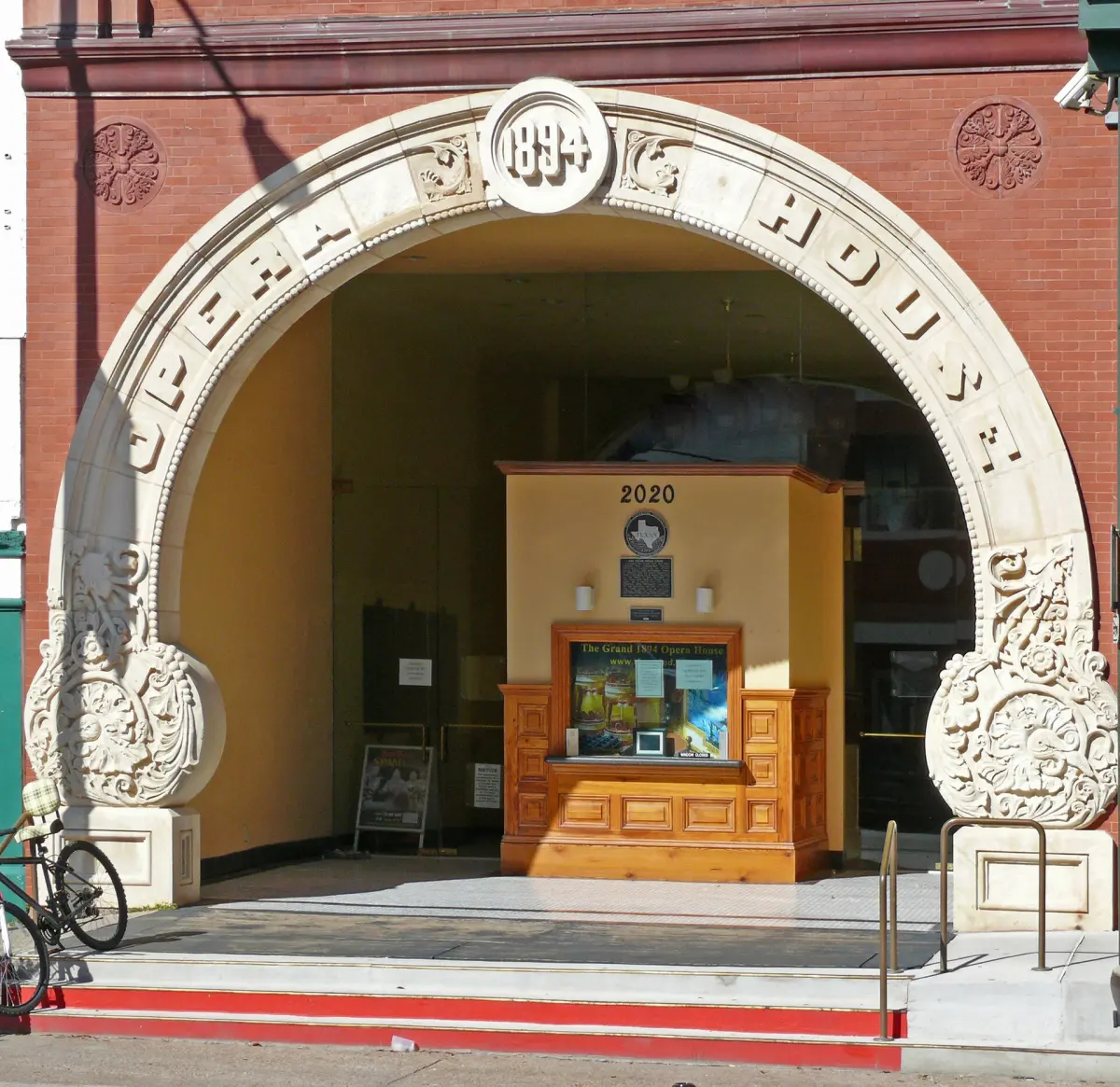
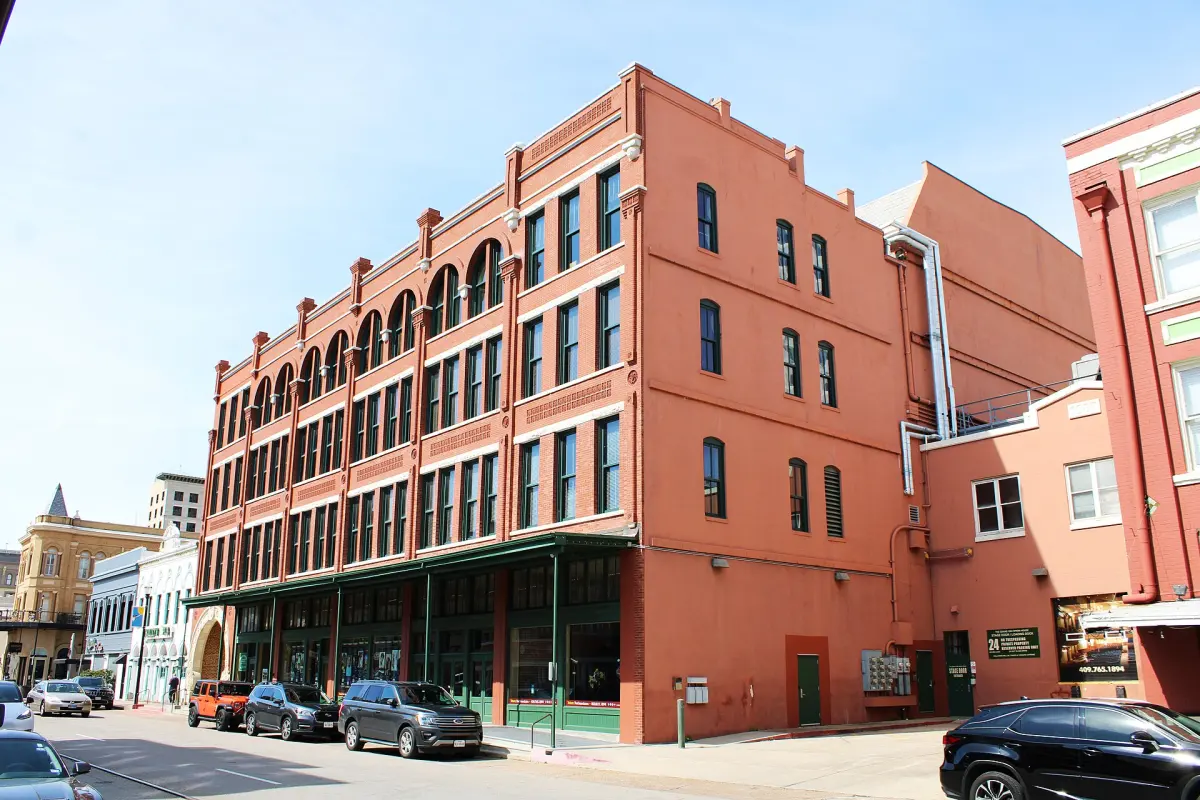
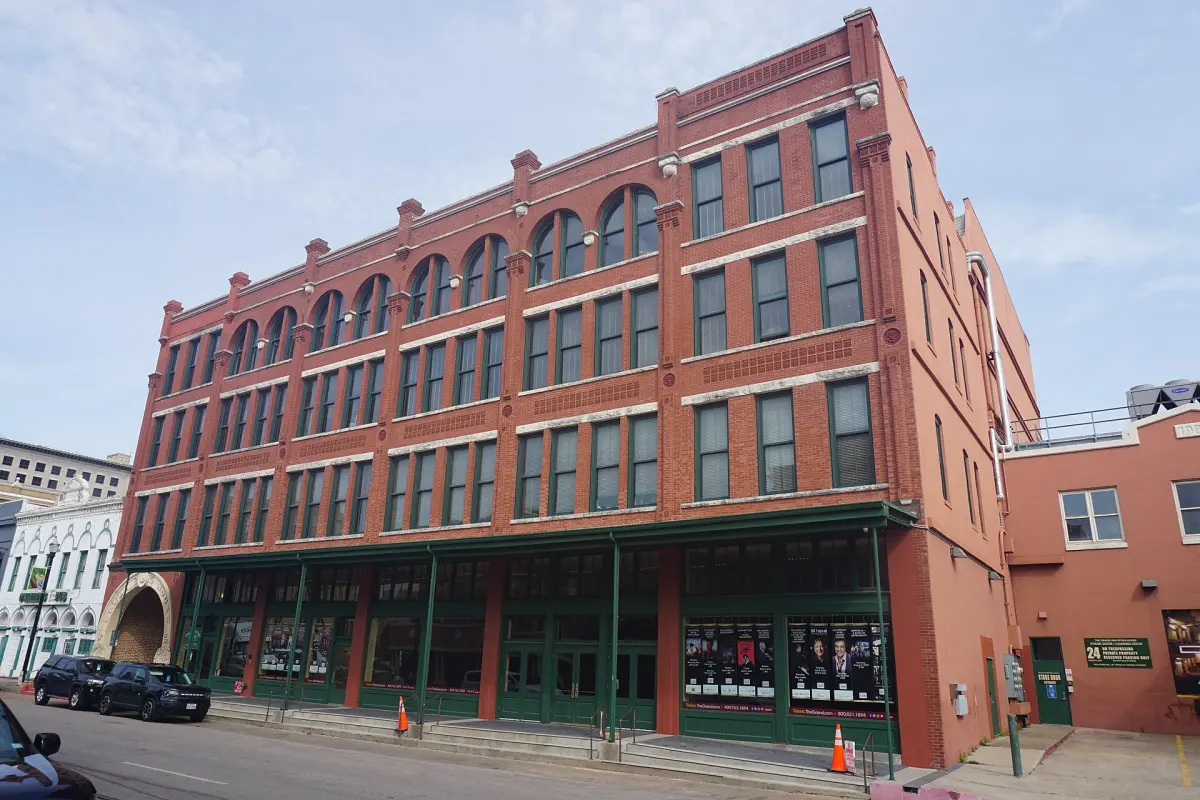
The Grand Opera House opened on Postoffice Street in Galveston in January 1895. Henry Greenwall, whose theatrical circuit controlled opera houses across the South, threatened to drop Galveston from his circuit unless it built a safer, better theater, and Galveston businessmen including Leon Blum, John Sealy, and George Sealy bought stock in the Grand Opera House Company. Architect Frank Cox of New Orleans designed the Romanesque Revival building, with a hotel and stores in front and an auditorium of nearly 1,500 seats behind, one of the first built on modern theories of acoustics.
Its National Register nomination treats the Grand as a record of how a stage theater became a movie theater. The house showed its first film, of a bullfight, in 1896 alongside a production of Carmen, and in 1897 stock companies there ran early motion pictures between acts. By 1908 several movie houses had opened in Galveston, but the Grand still treated film as an extra until October 1915, when it presented D.W. Griffith's The Birth of a Nation with a symphony orchestra playing the score. After A. Martini bought the building in 1924, he renamed it the Martini, added an organ for silent pictures and two new projectors, and booked features along with vaudeville. In 1937 Martini opened a new theater nearby, and the old opera house became the State. Instead of competing with the movies and failing, the nomination says, the Grand joined them.
The Texas Historical Commission's marker text describes the conversion to a movie theater in the 1920s and restoration in the 1970s and 1980s. Cinema Treasures reports that the State ran as a movie house until 1971. The Galveston County Cultural Arts Council bought it in 1974, the year it entered the National Register, and spent twelve years returning it to its turn-of-the-century look. The Texas Legislature named it the official opera house of Texas in 1993. Today the nonprofit 1894, Inc. runs the Grand mainly for live performance, though it still presents silent films with live organ.