Texas Call Sheet Post a call
Majestic Theatre
Texas film legacymovie palace

Majestic Theatre

Built as the flagship of Karl Hoblitzelle's Interstate chain, it housed Interstate's headquarters in about 20,000 square feet of offices on its upper floors.

Dallas · Opened 1921 · operating (live performance); closed as a movie house in July 1973; reopened by the City…
1925 Elm St., Dallas, TX 75201
Filming location page

The story

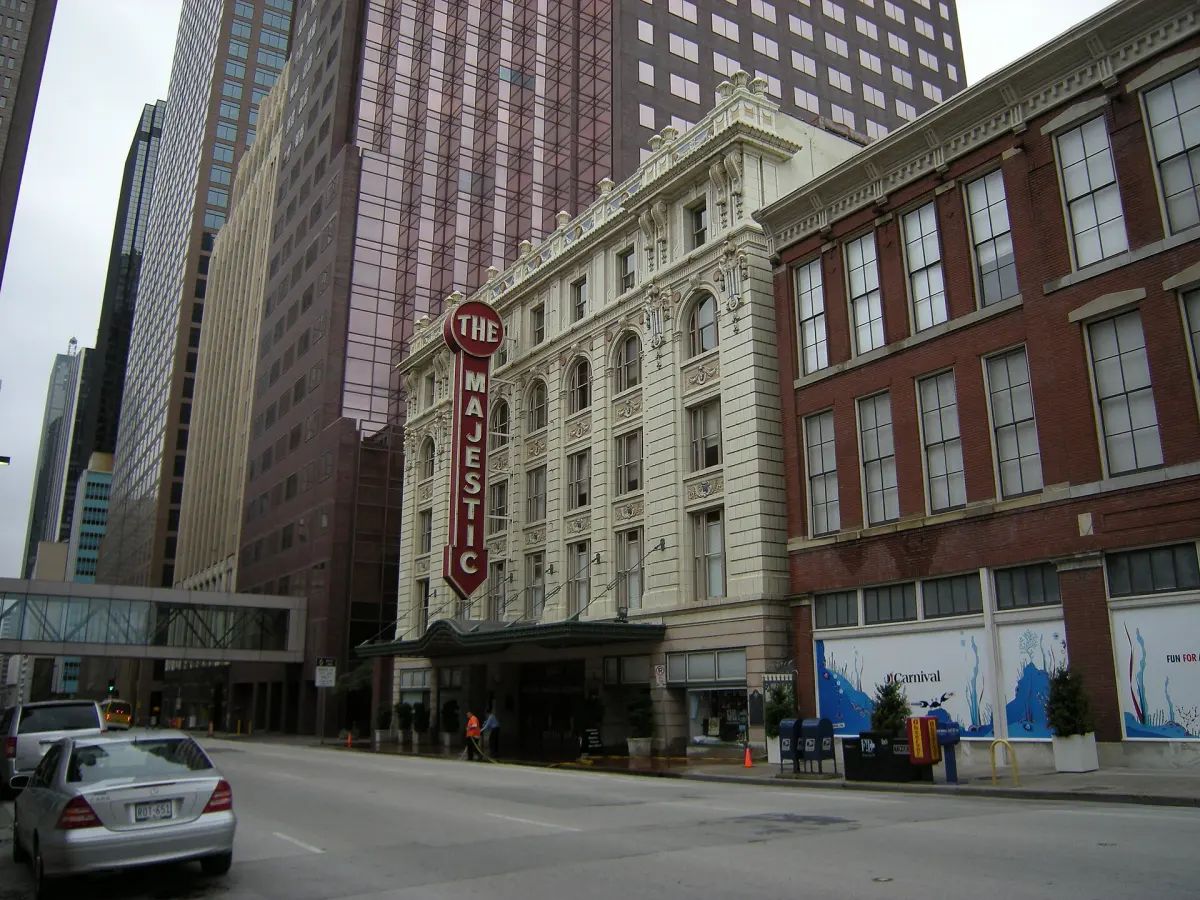
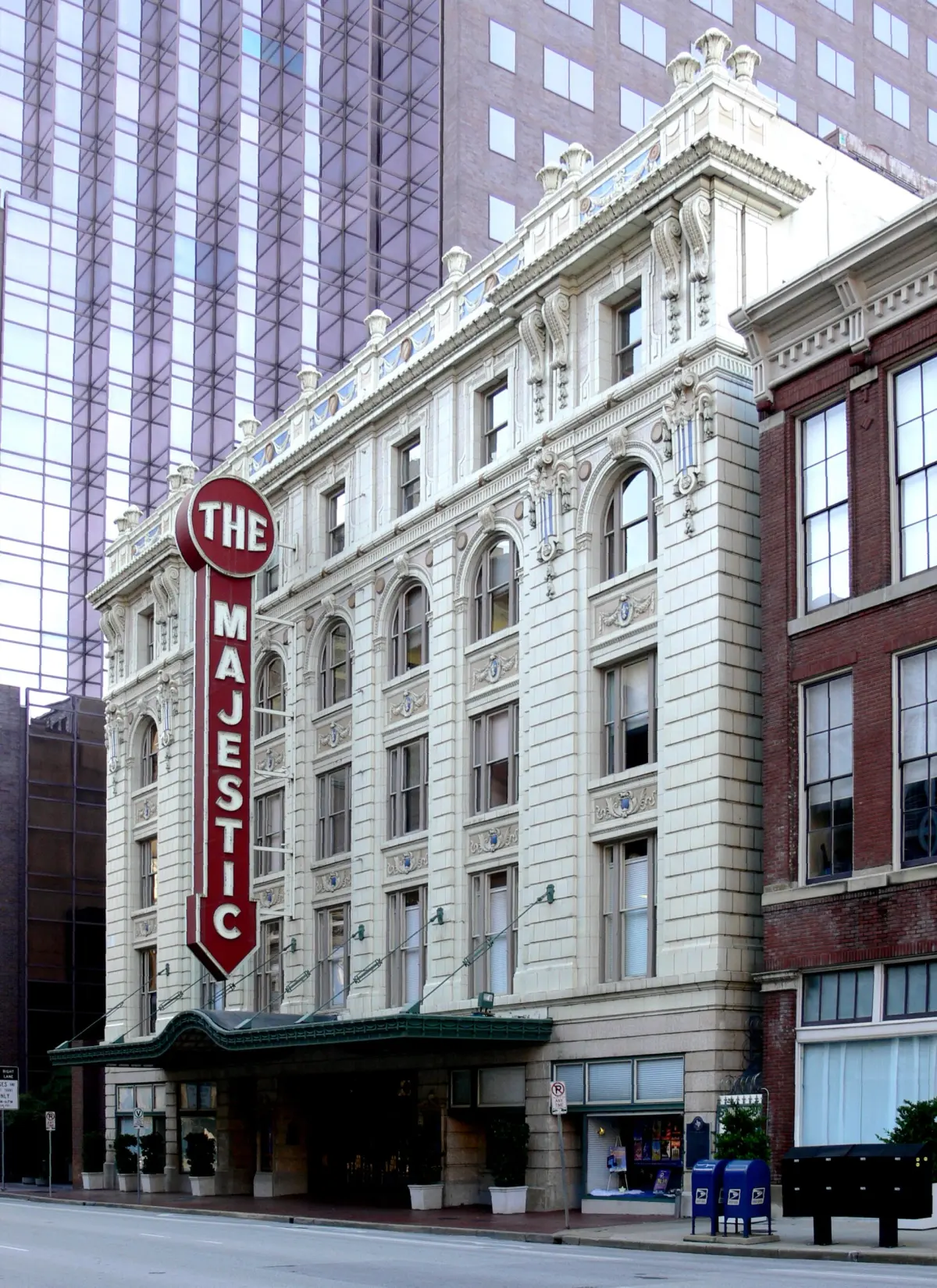
The Majestic at 1925 Elm Street is the third Dallas theater of that name. Karl Hoblitzelle's Interstate Amusement Company opened the first Majestic at Commerce and St. Paul streets in 1905; after it burned in 1916, Hoblitzelle hired Chicago architect John Eberson to design a replacement. Construction began in February 1920, and the new Majestic opened on April 11, 1921, with a gala featuring actress Olga Petrova. It cost about $2 million and served as the flagship of the Interstate chain, whose headquarters filled the offices on its upper floors.

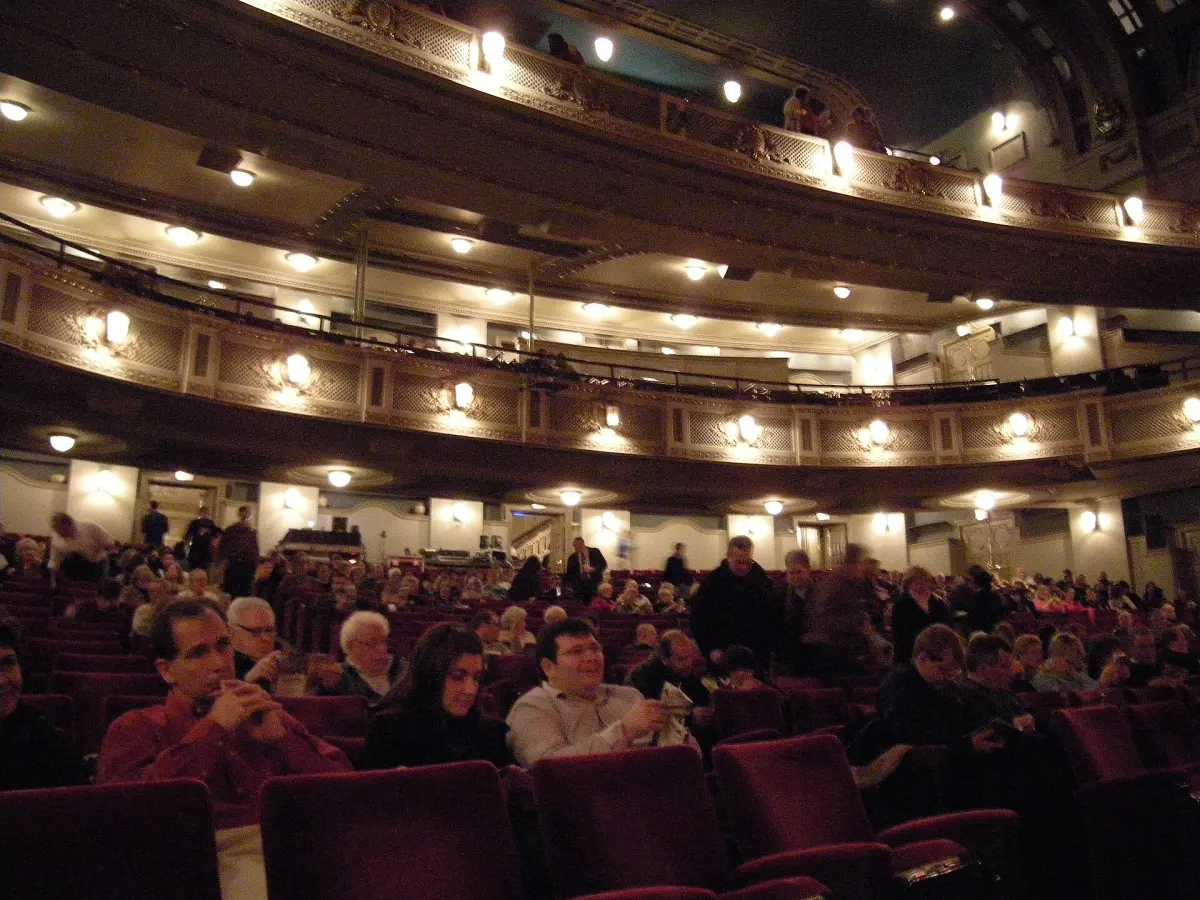
Eberson gave the five-story Renaissance Revival building a "Roman gardens" auditorium with a ceiling sky of drifting clouds and twinkling stars, 2,400 seats on three levels, and a children's playroom called Majesticland. The Majestic was the first Dallas vaudeville house to admit Black patrons, though only to a segregated fourth-floor balcony with its own entrance. Mae West, Jack Benny, Bob Hope, Harry Houdini and Duke Ellington appeared there, and Ginger Rogers began her career on its stage.

Movies were added to the vaudeville bill in 1922, and in 1932 the Majestic gave up full vaudeville seasons as film took over. Hoblitzelle sold Interstate to RKO in 1930, was asked to take over management of their Texas theaters in the 1933 reorganization, and kept managing them after Paramount bought his interest in 1950. It became known as the city's "action house" for adventure pictures, and in 1965 Thunderball set its one-week record of $75,000. Falling downtown attendance closed the Majestic on July 16, 1973, after a showing of Live and Let Die.

While it stood empty, Brian De Palma's crew spent five days in the building filming Phantom of the Paradise, with the Majestic standing in for the film's Paradise theater. Hoblitzelle had died in 1967, leaving the building to the Hoblitzelle Foundation, which gave it to the City of Dallas in 1976. In 1977 it became the first Dallas building listed in the National Register of Historic Places.

Voters approved $4 million in city bonds, a private campaign pledged $1 million, and a $5.9 million renovation ran from 1981 to 1982. Seating dropped to 1,570 to enlarge the orchestra pit. The theater was rededicated on January 16, 1983, and has since been a city-owned performing-arts hall for dance, theater, concerts and comedy.
Why it matters

It was the first Dallas vaudeville house to admit Black patrons, who were restricted to a segregated fourth-floor balcony with its own box office and street entrance. ↗︎
Films joined the vaudeville bill in 1922, and in 1932 the theater dropped full vaudeville seasons as movies became its main attraction. ↗︎
The last film shown before the 1973 closing was Live and Let Die, on July 16, 1973. ↗︎
Brian De Palma's crew filmed for five days in the recently closed theater, which doubled as the title venue of Phantom of the Paradise, using real people as the audience. ↗︎
Ginger Rogers began her career at the Majestic. ↗︎
A year after the Hoblitzelle Foundation gave it to the city in 1976, it became the first Dallas building listed in the National Register of Historic Places. ↗︎
The city's landmark nomination says the Majestic was known as Dallas's "action house" for adventure films, and that Thunderball set its one-week box-office record of $75,000 in 1965. ↗︎

Filmed here

YearTitle
1974Phantom of the Paradise ↗︎

Owners

OwnerYears
Interstate Amusement Company (Karl Hoblitzelle, president)1921–1930 ↗︎
RKO (RKO Southern), after Hoblitzelle sold Interstate1930–1933 ↗︎
Interstate Theater Circuit under Hoblitzelle, with Paramount financing half of the 1933 reorganization; a Paramount subsidiary from 1950 with Hoblitzelle contracted to manage1933–c. 1973 ↗︎
Hoblitzelle Foundation (building owner after Hoblitzelle's death)1967–1976 ↗︎
City of Dallas (managed by the Office of Cultural Affairs as of 2015)1976–present ↗︎
Preservation
National Register of Historic Places ↗︎
Recorded Texas Historic Landmark (marker) ↗︎
Dallas Landmark (Historic Overlay District No. 21, Majestic Theatre; ordinance re-established by No. 21270) ↗︎
Designed by Chicago theater architect John Eberson as a five-story, five-bay Renaissance Revival building; the interior followed a "Roman gardens" theme with a ceiling sky of floating clouds and mechanically controlled twinkling stars. ↗︎
The 2,400-seat auditorium was laid out in a fan shape on the main floor and two balconies; the restoration by the Oglesby Group cut seating to 1,570 to enlarge the orchestra pit and convert the balconies. ↗︎
Original amenities included Majesticland, a children's playroom with a carousel and petting zoo, and the Land of Nod nursery. ↗︎
The building cost about $2,000,000; the 1981–1982 restoration cost $5.9 million. ↗︎
The theater had a two-manual Kilgen organ. ↗︎

Photos

Majestic Theatre
Majestic Theatre
Majestic Theatre
Majestic Theatre
Sources
  1. Majestic Theatre Renovations, 1937-1997 (collection 1996-005) Dallas Municipal Archives, City of Dallas
  2. National Register of Historic Places Inventory-Nomination Form: Majestic Theatre Texas Historical Commission / National Park Service 1977
  3. Majestic Theatre (NRIS 77001437) National Park Service (NPGallery)
  4. Majestic Theatre (historical marker 6779) Texas Historical Commission Atlas 1983
  5. Majestic Theatre (Dallas) Handbook of Texas, Texas State Historical Association
  6. Majestic Theatre opens in Dallas Texas State Historical Association (Texas Day by Day)
  7. Phantom of the Paradise (1974) AFI Catalog of Feature Films
  8. Ordinance No. 21270: Historic Overlay District No. 21 (Majestic Theatre) City of Dallas
  9. Majestic Theatre #3 Cinema Treasures
  10. Majestic Theater (Dallas Landmark) City of Dallas Historic Preservation
  11. Majestic Theater Landmark Nomination Form City of Dallas
  12. Majestic Theatre (National Register listing) Texas Historical Commission Atlas 1977-11-14
Image credits (3)

Majestic Theatre: Joe Mabel, CC BY-SA 3.0, Wikimedia Commons; Majestic Theatre: Photo: Andreas Praefcke, CC BY 3.0, Wikimedia Commons; Majestic Theatre: Joe Mabel, CC BY-SA 3.0, Wikimedia Commons.

Correct this page