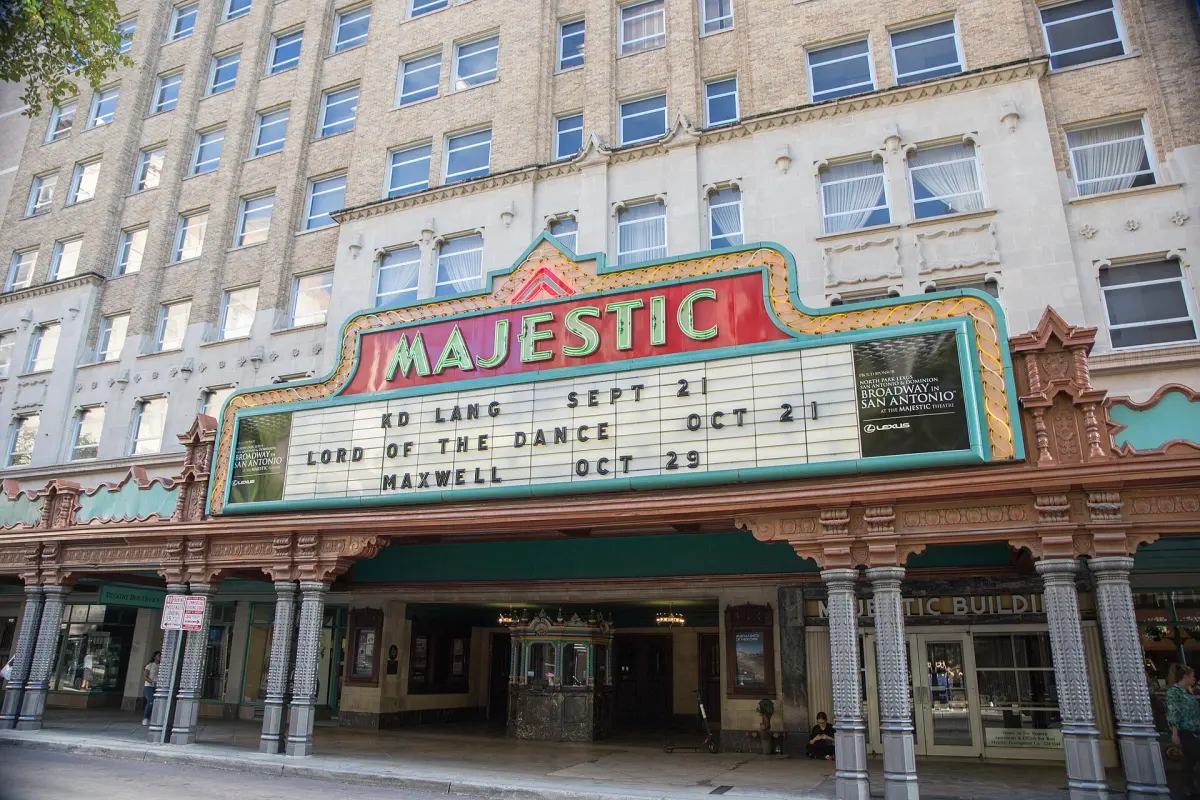
Karl Hoblitzelle's Interstate circuit opened the Majestic Theatre on Houston Street on June 14, 1929, as the flagship of its Texas chain. Chicago architect John Eberson designed it inside a new 15-story office building, and the theater fills parts of the first six floors. Construction, from demolition of the old building to the last of the interior decoration by Eberson's family firm, Michelangelo Studios, took thirteen months. With 3,700 seats it was the largest theater in Texas, and it was the first publicly accessible building in San Antonio with air conditioning, which the opening ads featured prominently.
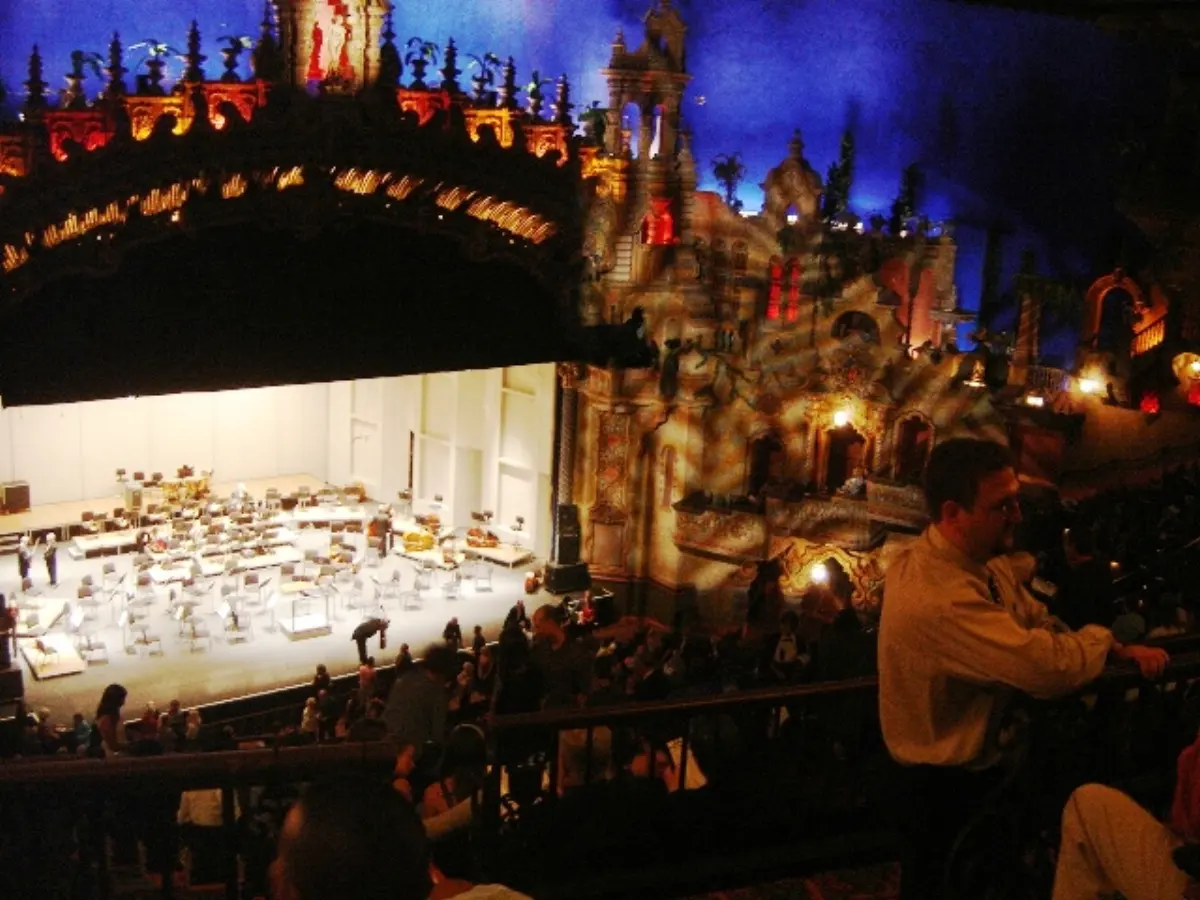
The auditorium is an atmospheric design: a dark blue ceiling with stars and drifting clouds over walls built to look like a Spanish village. The Majestic was also built for segregation. Its second balcony was set aside for Black patrons, who used a separate lobby and elevator on the far side of the block, and that balcony stayed in use until about 1960. Even opening-night charity money was split by section: proceeds from the white seats went to the Children's Hospital Fund, and those from the Black section went to an orphanage and the Campfire Girls.
The Majestic played vaudeville and movies for decades. Warner Bros. held the world premiere of San Antonio there on Thanksgiving Eve, and the studio's pressbook says it broke the house's opening-day record. By the summer of 1974 the theater was showing Black action films, then Spanish-language films for its final weeks, and it closed at the end of December 1974.
It was listed on the National Register in 1975 and reopened in 1981 for touring Broadway shows. In 1988 the City of San Antonio bought the Majestic and the neighboring Empire and leased them to Las Casas Foundation, which raised $5.5 million to restore the Majestic's plaster, paint and seating. The theater reopened in September 1989 as the home of the San Antonio Symphony, which stayed until it moved to the Tobin Center in 2014. The Majestic became a Recorded Texas Historic Landmark in 1991 and a National Historic Landmark in 1993. Today it seats 2,264 and books Broadway tours and concerts.