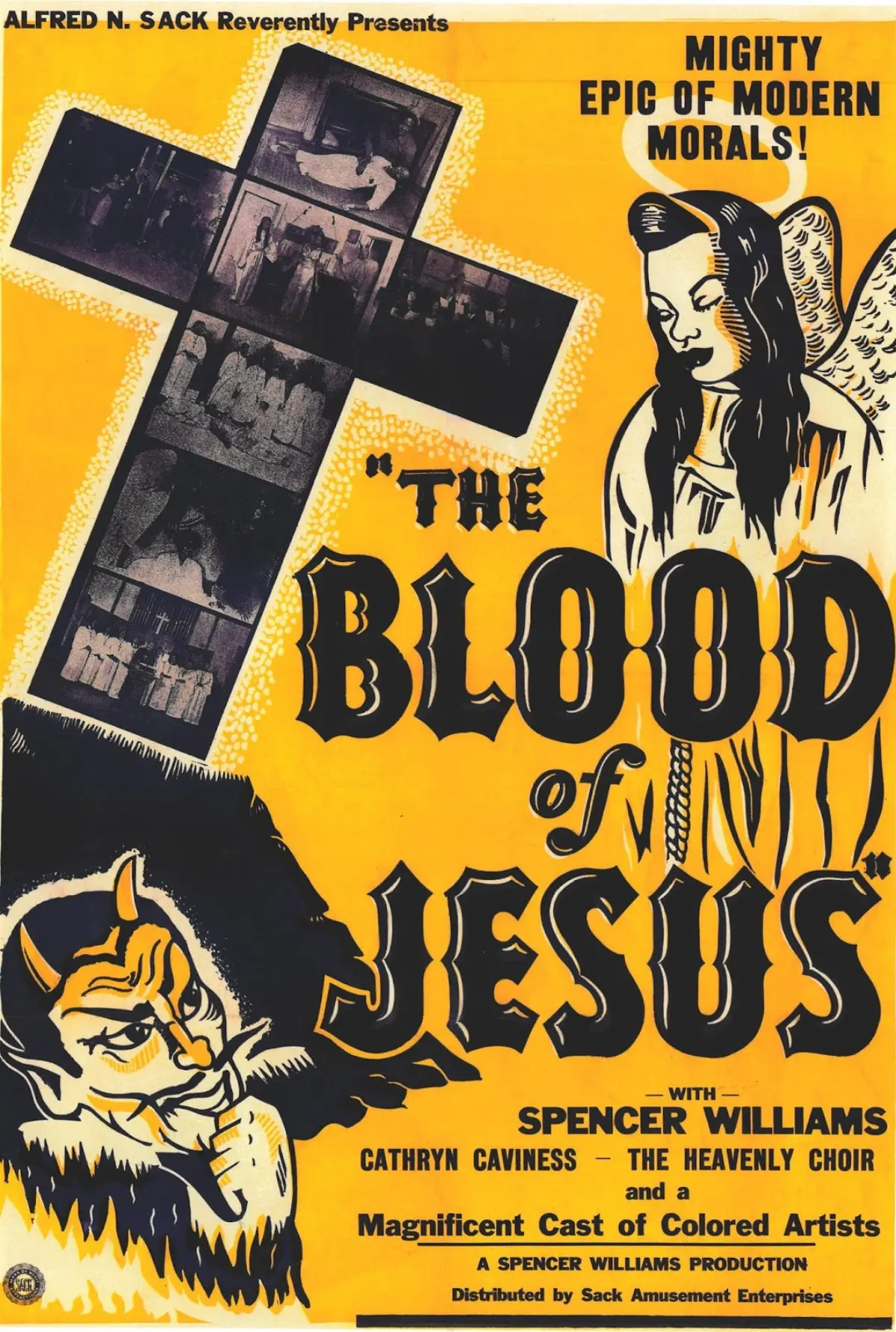
Alfred N. Sack formed Sack Amusement Enterprises in San Antonio in 1920. The Handbook of Texas describes the business, which later moved to Dallas, as a combination theater chain and production company, and as the main distributor of Black-cast films in the United States between 1920 and 1950. These were what the trade then called race movies, made for Black audiences, and Sack's company supplied them to many theaters in the Southwest. Between 1937 and 1945 the company was a major producer and distributor of features and short subjects starring African Americans.
In the early 1940s Sack met Spencer Williams, a Black writer and actor who had worked in Hollywood since the coming of sound. Sack offered to finance a series of features, and Williams agreed to write, direct and act in them. The first, The Blood of Jesus (1941), was produced under the Amegro Films name and distributed by Sack Amusement Enterprises. In it a young Baptist wife, struck by a shotgun blast after her husband carelessly leaves the gun against a wall, faces a crossroads between salvation and hell, and the soundtrack is built on spirituals sung by Rev. R. L. Robertson and the Heavenly Choir. The Library of Congress essay on the film describes Sack as a white producer of many race films and notes that the picture realized some financial success. After it did well, according to the AFI Catalog, Sack offered Williams a ten-year contract for eight more films.
From 1941 through 1947 the partnership made ten features, most of them shot in and around Dallas: religious dramas such as Brother Martin and Go Down, Death!, comedies such as Juke Joint and Dirty Gertie from Harlem, U.S.A., dramas including Of One Blood and The Girl in Room 20, and a performance film with Dizzy Gillespie. The Handbook says Sack let Williams shape the films as he saw fit. Sack Amusement Enterprises was declared an inactive corporation in 1979. Most of the Sack-Williams films were later found and restored by the Southwest Film-Video Archives in Dallas, and in 1991 The Blood of Jesus was selected for the National Film Registry.